Queerness Is Not New we are ancient
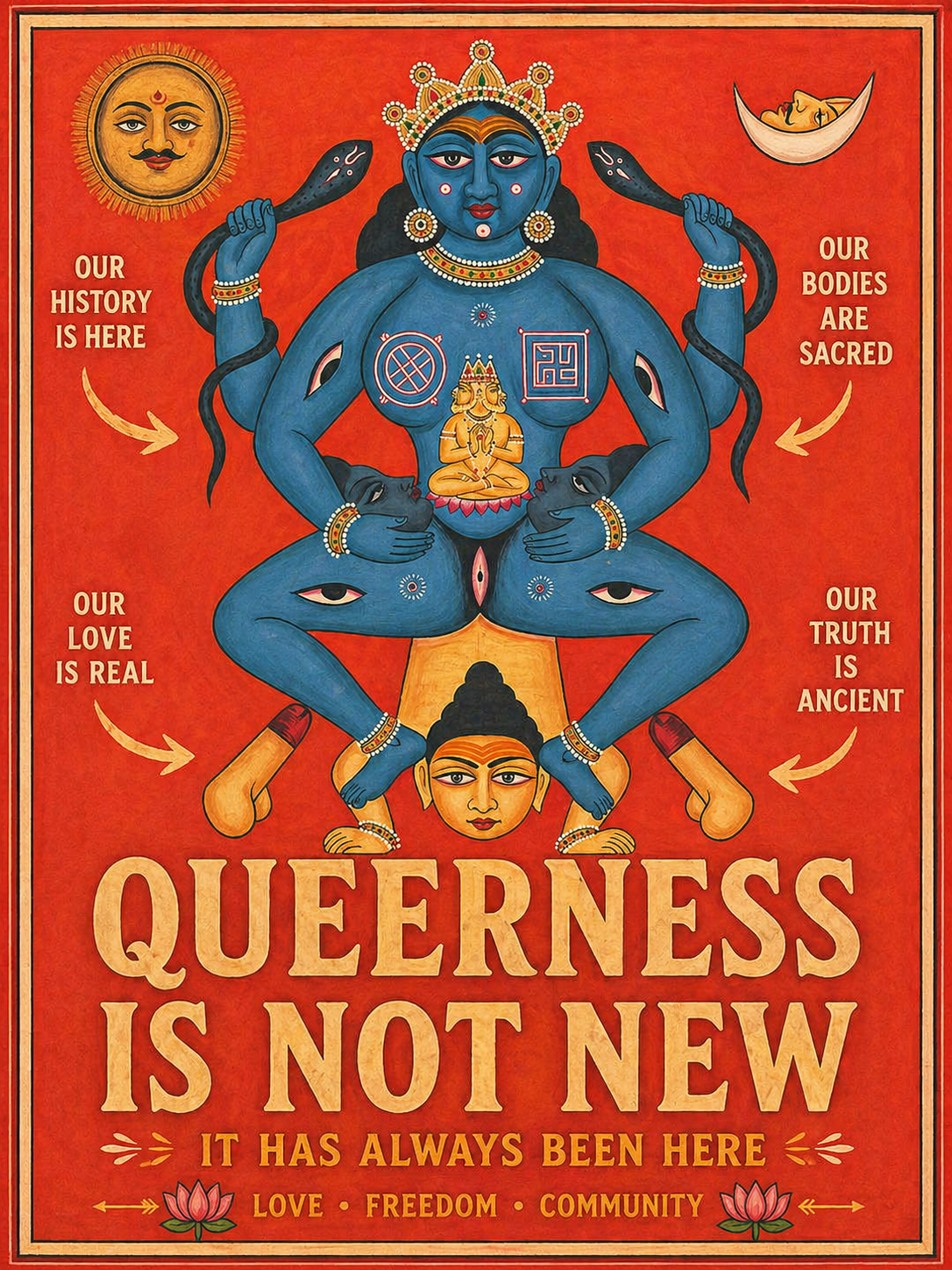
Reclaiming the Sacred Body in South Asian Traditions
There is a narrative many of us have been taught.
That queerness is foreign.
That sexuality outside rigid norms is modern.
That the body must be controlled, silenced, or hidden in order to be spiritual.
This narrative is not truth.
It is conditioning.
When we look closely at the cultural, artistic, and philosophical roots of South Asia — including India and Sri Lanka — we begin to see something very different.
We begin to remember.
Temples as Archives of Human Experience
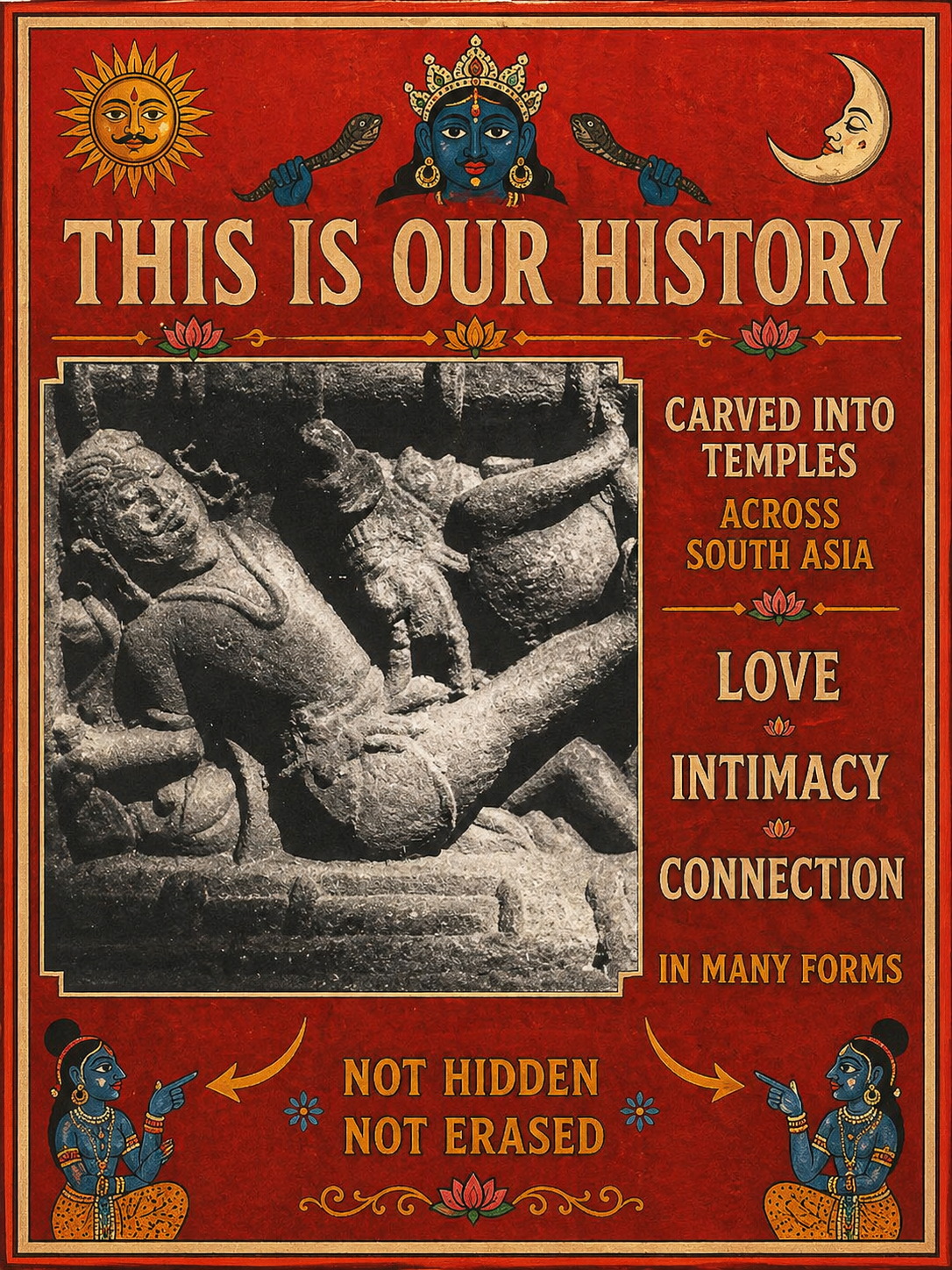
Across South Asia, temple walls hold stories that go far beyond religion. They are records of life — of movement, music, relationships, and intimacy.
The temples of Khajuraho, built between 950–1050 CE, are one of the clearest examples. While often reduced to “erotic temples,” only a small portion of their carvings depict sexuality. Yet those carvings are intentional and unmistakable.
They show:
intimacy between men and women
same-sex interactions
multiple bodies in connection
expressions of pleasure and desire
These are not hidden. They are carved into sacred architecture.
One interpretation is that these depictions reflect a broader philosophy of life — where dharma (purpose), artha (livelihood), kama (desire), and moksha (liberation) are all part of a complete human experience.
ref - https://lakshmisharath.com/stories-erotic-sculptures-of-khajuraho/?utm_source=chatgpt.com
Kama: Desire as a Natural Part of Life
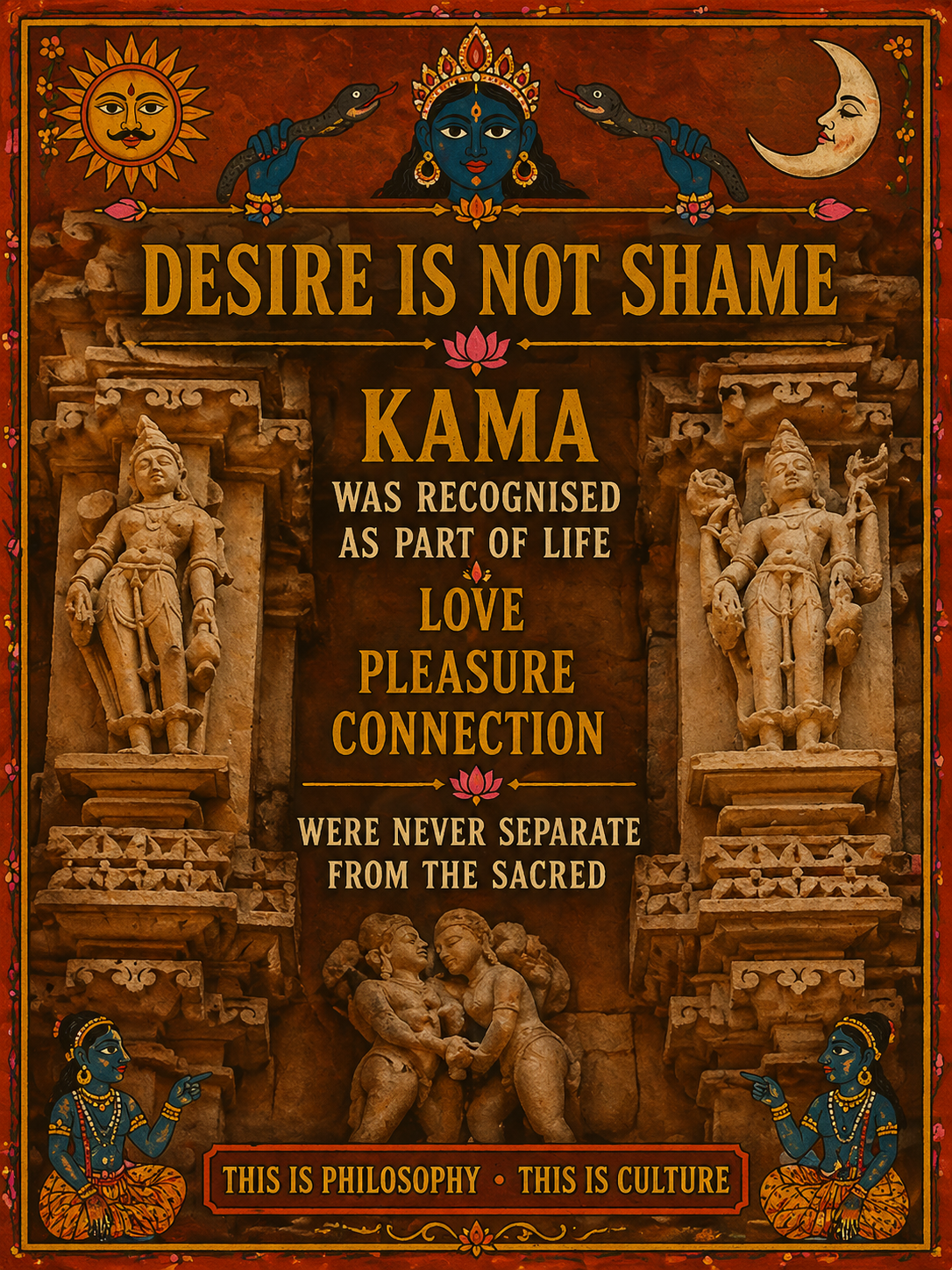
WhatevIn South Asian philosophy, kama is not a problem to be solved. It is one of the fundamental aspects of being human.
It sits alongside purpose, prosperity, and liberation as one of the core aims of life.
This alone challenges the idea that spirituality requires repression.
Ancient texts such as the Kama Sutra do not approach desire with shame. They approach it with curiosity, understanding, and respect — even including references to same-sex attraction and relationships.
Desire was not separate from the path.
It was part of it.er it is, the way you tell your story online can make all the difference.
Queerness Has Always Been Present
Queerness is not a modern identity imposed onto ancient cultures.
It has always existed — in language, in literature, in ritual, and in art.
Historical references across South Asia show:
documentation of same-sex relationships in early texts
recognition of gender diversity, including third-gender identities such as the Hijra community
artistic depictions of non-heteronormative intimacy
Even within Khajuraho, there are depictions of same-sex intimacy that exist openly within the wider sculptural narrative — not as anomalies, but as part of the whole.
Queerness was not erased. It was integrated.
What Changed?
If this was once part of our cultural landscape, why does it now feel controversial?
The answer is complex, but one major influence is colonial history.
Many of the laws, moral frameworks, and social attitudes that criminalised or stigmatized queer identities in South Asia were introduced during colonial rule.
Over time, these external frameworks reshaped how people viewed the body, desire, and identity.
What was once integrated became divided.
What was once visible became hidden.
Sri Lanka: Complexity, Not Simplicity
In Sri Lanka, historical texts like the Mahavamsa focus on kingship, morality, and society, but they also reflect a world that was layered, human, and complex.
When we look at broader South Asian history, including references to early Lanka, there is evidence of more fluid understandings of sexuality and human relationships than what is often presented today.
This reminds us that culture is not static.
It evolves, adapts, and is often rewritten.
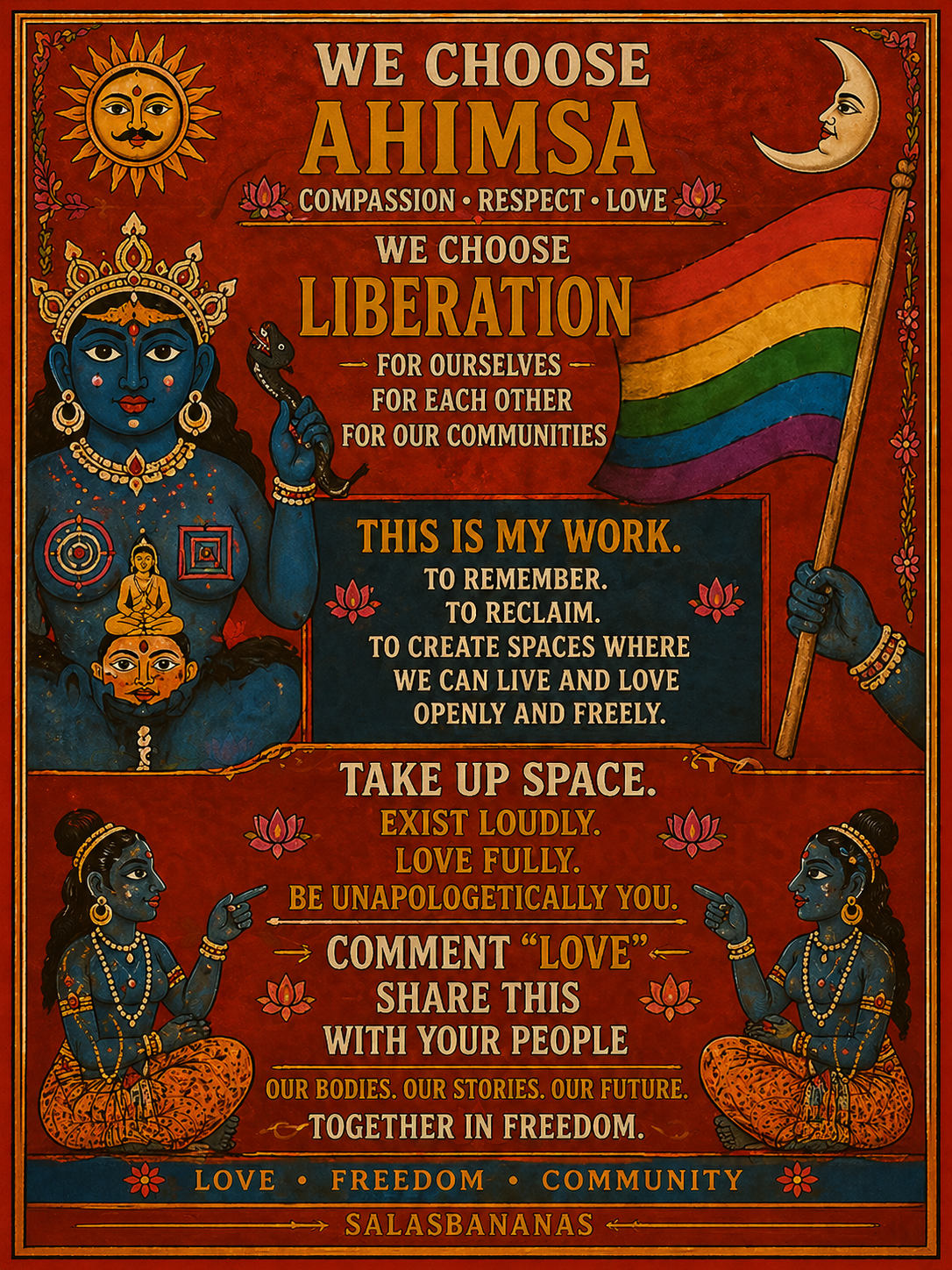
The Body Was Never the Enemy
At the heart of this conversation is something simple:
The body is not separate from the sacred.
South Asian traditions — especially those influenced by tantric and yogic philosophies — often view the body as a vehicle for awareness, connection, and transformation.
Not something to suppress.
Not something to be ashamed of.
But something to understand.
Reclaiming What Was Always Ours
To speak about queerness today is not to introduce something new.
It is to reclaim something that has always existed.
It is to remember:
that love takes many forms
that identity is not rigid
that desire is not inherently wrong
that the sacred is not separate from the human
This is not rebellion.
This is restoration.
Why This Matters Now
We are living in a time where people are questioning inherited beliefs.
Where people are looking back — not to romanticize the past, but to understand it more fully.
This work is part of that process.
Not to argue.
Not to provoke.
But to open space.
For truth.
For presence.
For people to exist as they are.
This is not just something I write about.
This is something I am living and creating.
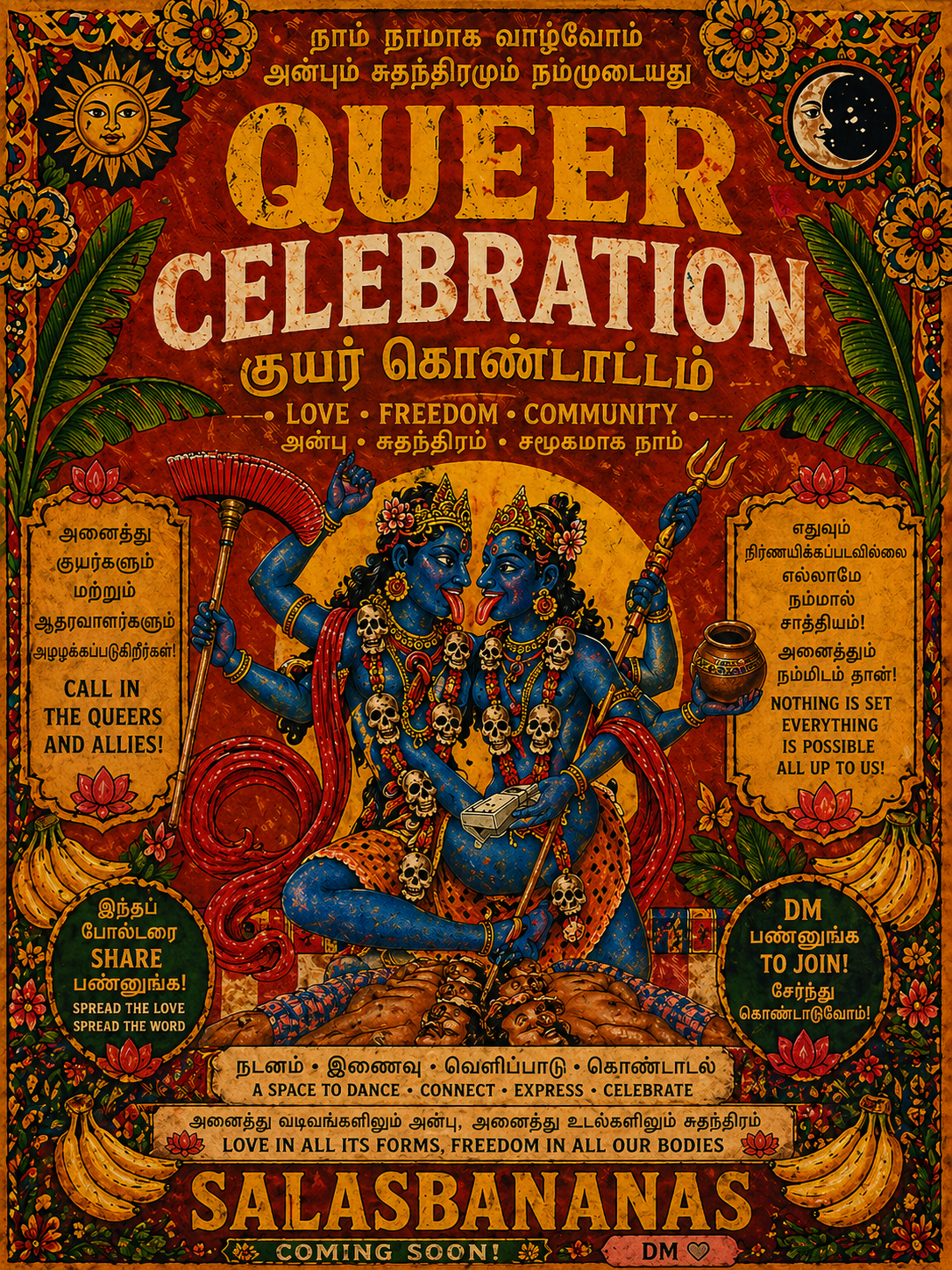
I am opening a space — a gathering, a celebration —
where queerness is honoured as it is.
As truth.
As presence.
As part of life.
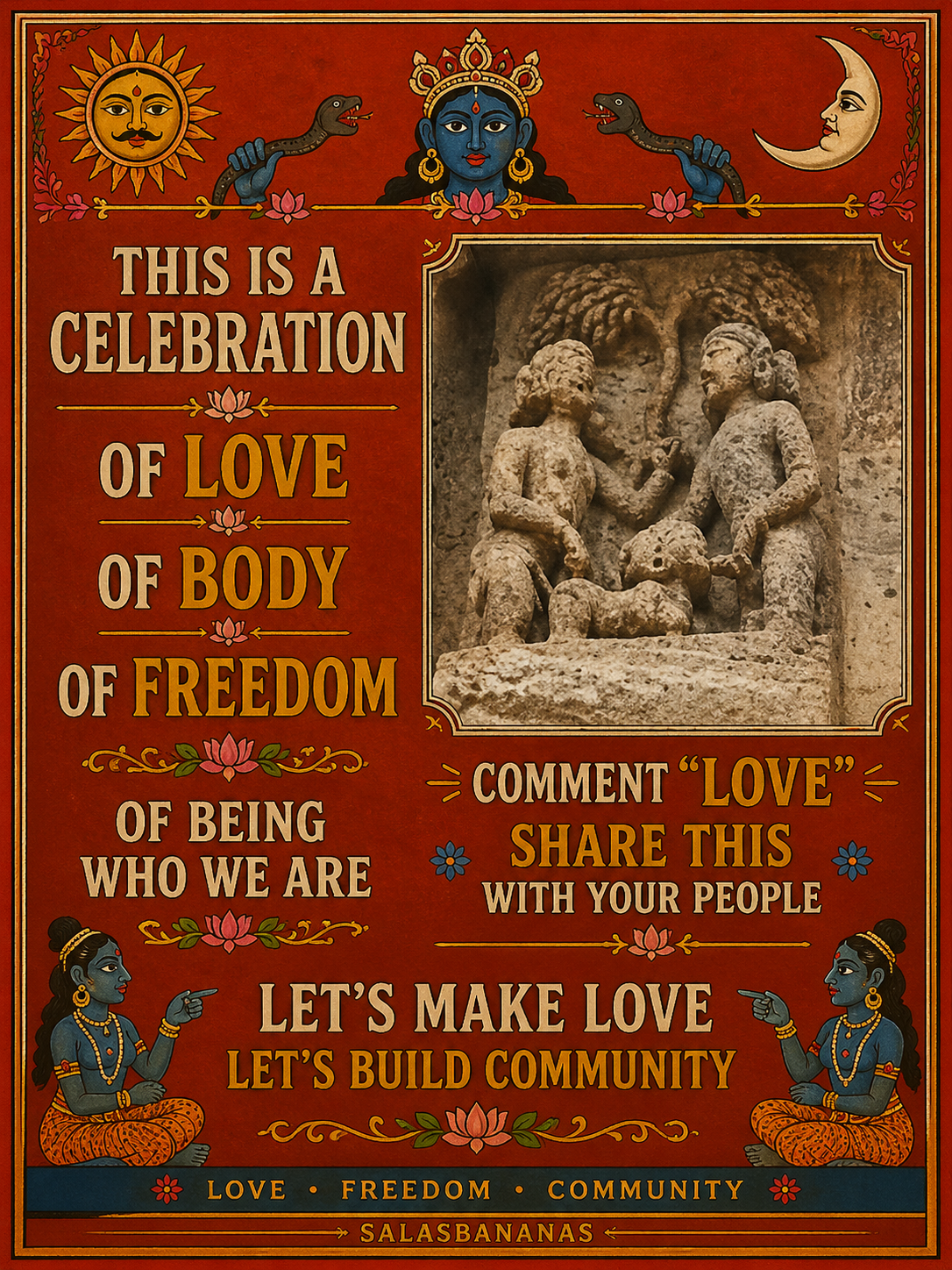
A substance-free Queer Celebration
rooted in connection, movement, expression, and community.
A space to dance, to feel, to be seen, to exist fully —
without pressure, without performance, without anything external needed.
Just us.
As we are.
If this speaks to you,
if you feel the pull to be part of something real,
message me.
I’m currently gathering the first circle of people who want to co-create and participate in this celebration.
Come as you are.
Bring your truth.
Take up space.
love • freedom • community
salasbananas
References & Further Reading
Here are sources if you want to explore deeper:
Articles & Online Writing
Foundational Concepts
Books
Same-Sex Love in India – Ruth Vanita & Saleem Kidwai
Love’s Rite – Ruth Vanita
Footprints of a Queer History
